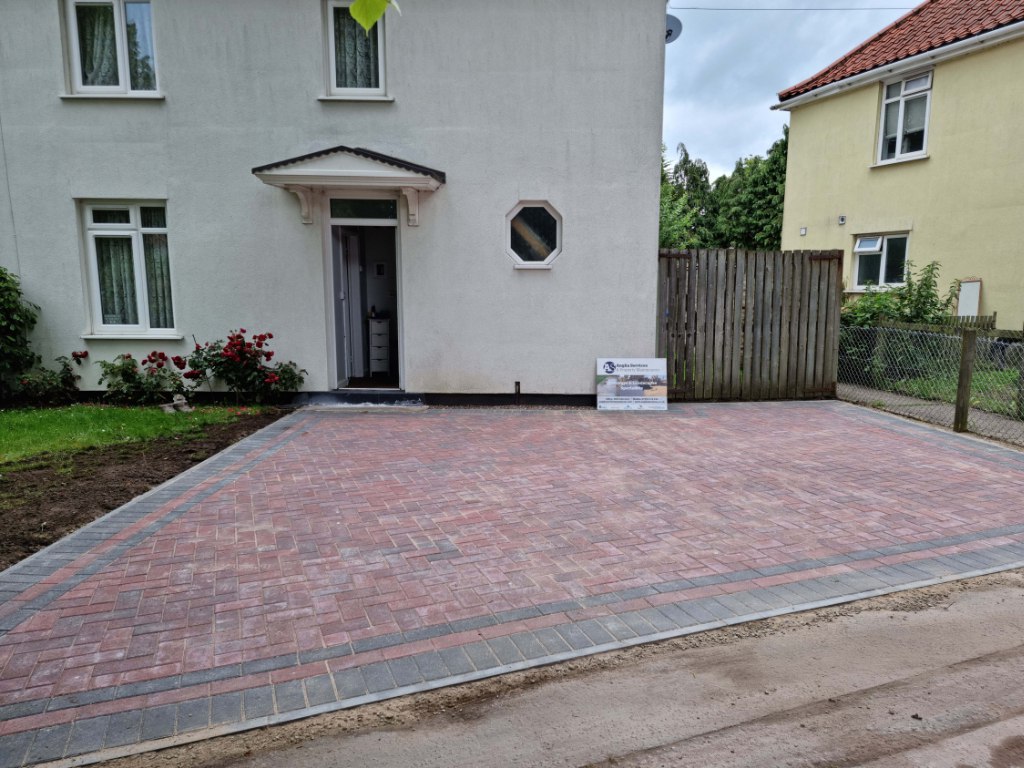
How Can Block Paving Connect a Patio With a Driveway?
A driveway and patio often perform very different functions, yet they are both important parts of the same outdoor space. When these areas are designed independently, the transition between them can sometimes feel awkward or disconnected. Block paving provides a practical way to create visual and physical continuity while still allowing each area to retain its own purpose.
For properties in Rushden, Northamptonshire, block paving can be used to link a driveway with a patio through coordinated materials, pathways, borders and carefully planned transitions. The result does not need to make both areas look identical. Good design can establish enough consistency to make the outside space feel connected while clearly distinguishing between parking, access and relaxation areas.
Why Use Block Paving to Link a Driveway and Patio?
One of the main advantages of block paving is its design flexibility. Individual blocks can be arranged in different patterns, colours and layouts, allowing separate outdoor areas to share common visual details.
A driveway may require a strong, practical layout suited to regular vehicle use, while a patio is generally designed around pedestrian use, seating and the wider garden. Block paving can accommodate these different requirements while providing a consistent design language between them.
This makes it possible to create an outdoor layout that feels planned as a whole rather than assembled from unrelated sections.
Create a Clear Route Between the Two Areas
One of the simplest ways to connect a driveway and patio is through a block paved path.
A defined pathway gives people an obvious route from the parking area towards the garden or patio. Instead of crossing lawns, loose ground or disconnected surfaces, there is a purposeful transition between the two spaces.
The route can be straight where direct access is important or shaped to work naturally with the garden layout.
A well-positioned path can also help organise the wider outdoor space by clearly separating movement areas from planting, lawns and other features.
Use Consistent Blocks to Create Visual Continuity
The patio and driveway do not necessarily need exactly the same paving pattern to feel connected.
Using related blocks, colours or textures can be enough to establish continuity. For example, the same block could appear as a driveway border and then become a more prominent part of the patio design.
This repetition creates a visual connection between areas without making them indistinguishable.
For homeowners who want different sections of the property to have their own character, this can provide an effective balance between consistency and variety.
Borders Can Tie Separate Surfaces Together
Block paving borders are particularly useful where the driveway and patio use different main surface materials.
A shared border design can run around both areas, creating a common visual feature. It can also continue along connecting pathways to reinforce the relationship between the spaces.
Borders are useful for more than appearance. Correctly installed edge restraints help support paved areas and maintain clear boundaries.
Combining structural purpose with design detail makes borders an important consideration when planning connected outdoor surfaces.
Different Laying Patterns Can Define Different Uses
Using block paving throughout does not mean every area has to follow the same laying pattern.
A driveway can use a pattern appropriate to its function, while the patio can have a layout that creates a different visual character. Repeating selected blocks or border details can still connect the two.
This can help make the function of each area immediately understandable.
The driveway remains clearly intended for vehicle movement and parking, while the patio feels more like a dedicated garden and seating area.
Transitions Should Feel Deliberate
The point where one outdoor area meets another deserves careful attention.
A poorly planned transition can result in awkward changes in level, narrow strips of unused ground or paving patterns that finish abruptly. These details can make otherwise attractive surfaces appear disconnected.
Block paving allows transitions to be designed deliberately.
Changes in pattern, borders or orientation can indicate that one area is ending and another is beginning while maintaining an overall sense of continuity.
Levels Need to Be Planned Across the Whole Space
Connecting a patio with a driveway is not purely a visual exercise.
The levels of both surfaces need careful consideration, particularly where the land changes height between different parts of the property.
A connecting path should provide a practical transition rather than introducing unnecessary changes in level. Surface falls also need to be planned so that water is managed appropriately.
Considering levels across the complete project can prevent one area from being designed in a way that creates difficulties for another.
Drainage Should Be Considered as Part of the Design
Driveways, patios and connecting paths all interact with rainfall.
When several hard-surfaced areas are positioned close together, the direction in which water moves becomes particularly important. Poorly planned levels can cause water to collect at transitions or move towards areas where it is not wanted.
Professional installation considers drainage alongside the visual design.
The objective is to create surfaces that work together practically as well as aesthetically, with appropriate falls and drainage arrangements incorporated into the layout.
Block Paving Can Help Make Awkward Spaces Useful
The area between a driveway and patio can sometimes become an awkward section of a garden.
It may be too narrow for meaningful planting, repeatedly worn by foot traffic or simply lack a clear purpose. Extending a block paved route through this space can transform it into a useful connection.
This can improve how people move around the property while reducing areas that otherwise become muddy, worn or difficult to maintain.
Good landscaping design often involves making these transitional spaces work harder rather than concentrating only on the largest areas.
A Connected Layout Can Improve Garden Flow
Outdoor spaces tend to feel more organised when there is a logical relationship between them.
A driveway provides arrival and access, a path guides movement, and a patio creates an area for outdoor use. Block paving can visually connect these functions so that moving from one to another feels natural.
This sense of flow can be particularly useful where the driveway is clearly visible from the garden or where the patio sits relatively close to the front or side access.
Rather than treating each surface as a separate project, they can be designed as parts of one overall layout.
Matching Everything Is Not Always Necessary
A common misconception is that connecting a driveway and patio means using exactly the same blocks throughout.
In reality, too much repetition can sometimes make it harder to distinguish between areas with different functions.
Subtle coordination can be more effective. Related colours, repeated edging or a shared block used selectively can create continuity while allowing the patio and driveway to have individual identities.
The best approach depends on the property, existing garden and intended use of each area.
Block Paving Can Complement Existing Surfaces
Connecting outdoor areas does not always require replacing every existing surface.
Where a driveway or patio remains in good condition, block paving may be incorporated through paths, borders or carefully designed transition areas.
This can help integrate existing features into a more coherent layout.
A professional assessment can establish how new paving can meet existing surfaces successfully and whether changes to levels or edges are required.
Ground Preparation Remains Essential
Attractive paving patterns cannot compensate for inadequate preparation.
Driveways, patios and paths have different loading requirements, but all need appropriate supporting construction. Excavation, sub-base preparation, compaction, bedding and edge restraints contribute to the stability of the finished paving.
Vehicle areas require particular consideration because they experience greater loading than pedestrian-only sections.
Planning the construction according to how each area will be used allows the finished surfaces to look connected without overlooking their different practical demands.
Details Can Make the Connection More Natural
Small design decisions can have a significant influence on how well two paved areas relate to one another.
The direction of the blocks, width of a pathway, position of borders and way corners are formed can all affect visual flow.
For example, a connecting path that aligns naturally with an entrance to the patio can feel considerably more purposeful than one that simply meets it at an arbitrary point.
Considering these details during the planning stage can produce a cleaner and more coherent finished layout.
Professional Design Helps Balance Appearance and Function
A successful driveway-to-patio connection needs to work visually, structurally and practically.
At Rushden Driveways & Patios, we consider how different outdoor areas relate to one another before determining the most appropriate block paving layout. This includes assessing intended use, access routes, levels, drainage, edges and the relationship with existing garden features.
For properties in Rushden, this approach can help create an outdoor space where the driveway, paths and patio feel connected without compromising the individual function of each area.
Conclusion
Block paving can connect a patio with a driveway by creating consistent visual details and practical routes between the two spaces. Shared blocks, coordinated borders, connecting pathways and carefully planned transitions can all help separate areas feel like parts of one considered outdoor design.
The most successful results also account for practical factors. Ground preparation, loading requirements, drainage, levels and edge support need to be planned according to how each part of the space will actually be used.
If you are considering improving the connection between your driveway and patio in Rushden, Northamptonshire, Rushden Driveways & Patios can assess the existing layout and recommend an appropriate block paving solution. Thoughtful planning can create better movement between outdoor areas while giving the property a more coherent and purposeful finish.
Call us on: 01933 823 204
Click here to find out more about Rushden Driveways & Patios
Click here to complete our contact form and see how we can help with your driveways.